How outsourcing janitorial work changes how a workplace runs
The savings are real but they are not the main argument. The main argument is what stops being your problem.
September 15, 2026 · 3 min read
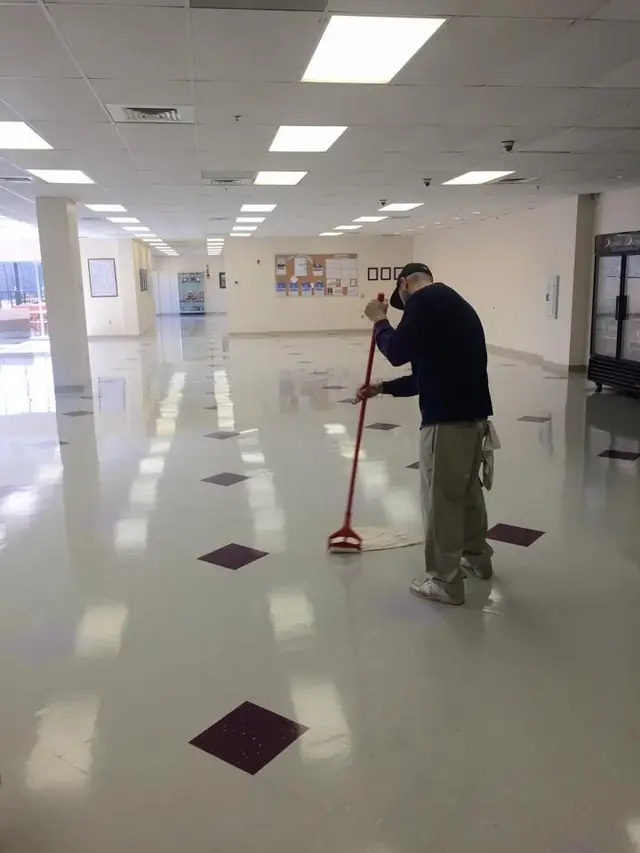
Most businesses that bring in a commercial cleaning contractor describe it afterwards as a cost decision, and the numbers usually do work out. But the cost comparison is the least interesting part of what actually changes. The bigger effects show up in management time, in coverage when someone is away, and in the long term condition of the building itself.
The part nobody budgets for
When cleaning is handled internally, somebody owns it, and it is almost never in their job description. Someone orders supplies. Someone notices the restroom is out of paper. Someone covers when the cleaner is sick. Someone handles the conversation when standards slip. Someone works out what to do about the floor that has started looking worn.
None of that appears as a line item. It appears as a manager's attention, spread across a dozen small interruptions that are individually trivial and collectively significant. That is the first thing that changes.
Coverage stops being fragile
A single in house cleaner is a single point of failure. Illness, holiday and turnover all become facility problems, and turnover in this trade is high. Hiring a replacement means recruiting, checking, training and supervising for a role most organizations are not set up to manage well.
A contractor absorbs that. Coverage is their operational problem, and continuity is what they are being paid for. It is worth asking specifically whether the same crew covers your site, because that is where consistency actually comes from.
Access to equipment you would not buy
This is the most underrated difference. Commercial floor equipment is expensive, needs storage, needs maintenance and needs training to use safely. High speed burnishers, industrial carpet extractors, electrostatic disinfecting sprayers and the access equipment for high glass are all realistic for a contractor spreading the cost across many buildings, and unrealistic for one office to justify.
The result is not just better cleaning. It is a different category of work being possible at all. Stripping and recoating a VCT floor, extracting traffic lanes properly, burnishing on a cycle and washing upper elevation glass are all things most in house arrangements simply never do, and their absence shows up over years rather than weeks.
Floors last longer, which is where the money actually is
Hard floors and carpet are capital assets with a replacement cost, and both respond directly to maintenance. A VCT floor kept on a burnishing programme needs stripping and recoating far less often. Carpet that is extracted on a cycle lasts years longer than carpet that is only vacuumed, because what wears it out is grit down in the pile rather than anything on the surface.
Deferred floor maintenance is a genuine liability that does not appear anywhere until the quote to replace the flooring arrives. This is the argument that tends to land with anyone who has had to sign one of those.
What you give up
It is worth being straight about the trade offs, because they are real:
- Less direct control over exactly how and when things get done
- A contract to manage, with scope and notice periods that need reading
- Reliance on a provider whose consistency you have to verify rather than observe
- The need to communicate changes rather than simply telling someone on site
Most of these are manageable, and most of them come down to choosing a provider you can actually reach. If the person answering the phone can make a decision, these trade offs stay small. If you are routed through three people to get a spill dealt with, they do not.
How it usually feels once it settles
The most common description from facility managers is not that the building is dramatically cleaner. It is that the building stopped being something they think about. The restrooms are stocked. The floors are on a plan. The glass gets done. Nobody is chasing supplies or covering a shift.
Whether that is worth it depends on the size of your site and how much of someone's week it is currently absorbing. For most commercial buildings past a certain size, the honest comparison is not contractor cost against employee cost. It is contractor cost against employee cost plus supplies plus equipment plus management time plus the flooring you will replace earlier than you needed to.
Commercial Maintenance Specialist, 704-827-4211
Call 704-827-4211More articles
Carpet sanitizing vs disinfecting: what your office actually needs
The two words get used as if they mean the same thing. They do not, and the difference decides what you should be paying for.
Questions to ask before you sign a commercial cleaning contract
Most cleaning contracts are judged on price because the buyer has no other way to compare them. These questions give you one.