Questions to ask before you sign a commercial cleaning contract
Most cleaning contracts are judged on price because the buyer has no other way to compare them. These questions give you one.
September 15, 2026 · 4 min read
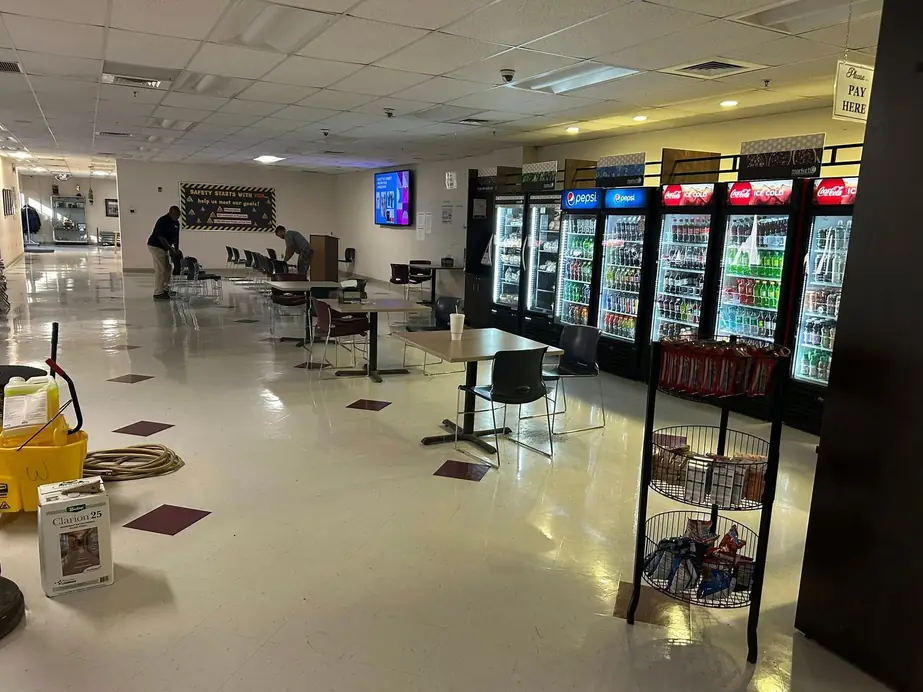
Commercial cleaning is unusually hard to buy well. The work happens when nobody is there to watch it, the quotes all describe the same tasks in the same language, and the only number that varies obviously is the price. So price is what most decisions come down to, which is exactly how a building ends up on its third cleaning company in two years.
The questions below are the ones that actually separate providers. None of them are gotchas. A good company will answer all of them without hesitating.
Who is actually in my building
Ask whether the same people cover your site each visit, or whether it is whoever is available that night. Consistency is not a soft preference. A crew that knows your building knows which corridor dulls first, which door sticks, which room gets used for lunches, and where the supplies live. A rotating crew relearns your building every week and never gets past the checklist.
Ask directly whether the staff are trained, experienced and insured, and be specific that you mean the people who will be on site rather than the company in the abstract.
What happens when something is missed
Something will eventually be missed. What matters is what happens next. Ask who you call, how quickly it gets addressed, and whether the person you call can actually make a decision.
This is where small owner operated companies tend to have a structural advantage. If the person answering the phone owns the business, the problem gets solved rather than logged. If you are routed through an account manager who has to check with operations, expect a slower answer.
What is on the nightly list, and what is on a cycle
Every contract should be clear about which tasks happen every single visit and which rotate. Dusting, vacuuming, trash removal, restroom sanitation and high touch disinfection are usually nightly. Floor buffing, carpet extraction, window and glass work, and deep cleaning behind equipment usually sit on their own schedules.
The failure mode is a quote that lists twenty tasks without saying how often each one happens. That reads generous and delivers a nightly pass with everything else quietly deferred.
How is the hard floor being maintained
This is the question that separates a cleaning contract from a maintenance contract, and it has real money attached. Hard floors are a capital asset. A floor kept on a buffing or burnishing programme needs stripping and recoating far less often, and a floor that is only mopped will need rescuing on a schedule you did not plan for.
Ask what the plan is for your specific floor types, because a carpeted bay, a VCT corridor and a tiled entrance in the same building all wear differently and should not be treated identically.
What about the areas nobody mentions
Loading docks, receiving areas, high racking, stairwells, elevator tracks, the corridor outside the restrooms. These are the zones that get scoped out when a quote is built from square footage alone, and they are usually the zones a visitor notices.
Walk the building with whoever is quoting and see whether they bring these up before you do.
Can you work around how the building actually runs
Most commercial cleaning happens after hours, which raises practical questions worth settling up front:
- How are keys, codes and alarms handled, and who holds them
- What hours are actually workable for your building, including weekends
- How does scheduling change around a shutdown, a holiday or a fit out
- Who is reachable overnight if something goes wrong on site
- How much notice is needed to add a one off deep clean
What is the pricing actually based on
Ask what the quote is built from. Square footage, frequency, floor types and scope should all be visible in how the number was reached. A price with no visible basis is difficult to compare and difficult to adjust later when your needs change.
Be wary of a number that is materially below everyone else. In a labour intensive trade, a much lower price usually means fewer hours on site, and fewer hours on site shows up as the slow decline that is hard to point at and impossible to miss.
How long have they been doing this
Longevity in commercial cleaning is a meaningful signal, because it is a trade with high turnover and low barriers to entry. A company that has held contracts in the same region for decades has kept clients, which is a harder thing to do than win them.
Ask for references from buildings like yours, and ask how long those relationships have run. A provider who has kept a client for ten years is telling you something a brochure cannot.
Commercial Maintenance Specialist, 704-827-4211
Call 704-827-4211More articles
Carpet sanitizing vs disinfecting: what your office actually needs
The two words get used as if they mean the same thing. They do not, and the difference decides what you should be paying for.
Day porter or nightly janitorial: which does your building need
One keeps the building clean. The other keeps it presentable while people are in it. They are not substitutes.