Professional window cleaning: clarity and safety in a working building
Glass does not get dirty overnight. It dims slowly, which is exactly why buildings leave it far too long.
September 15, 2026 · 4 min read
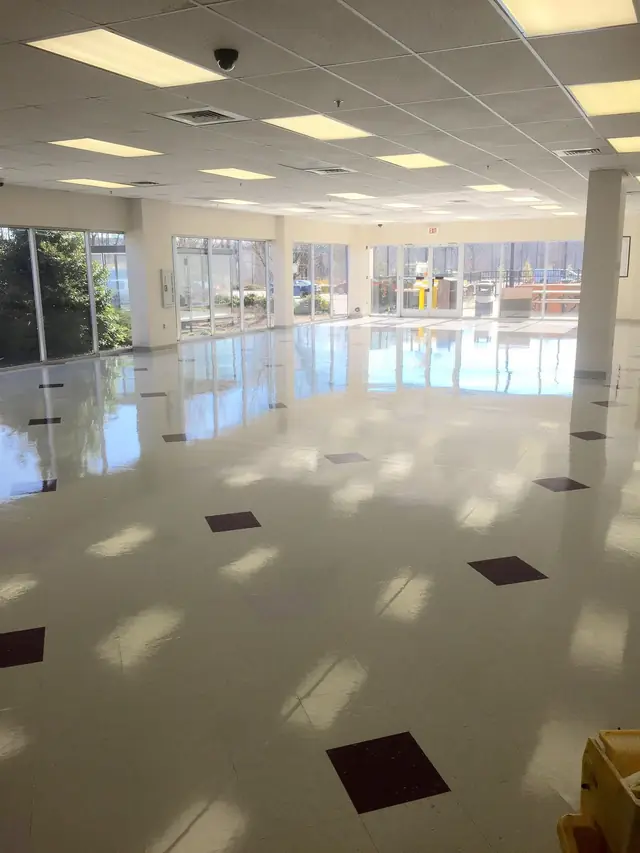
Nobody walks into a building and says the windows are dirty. They say it feels dark, or tired, or that the lobby does not look like it used to. Glass dulls gradually, everyone inside adjusts to it a little at a time, and the decline goes unremarked until the day it gets cleaned and the difference is startling.
Interior and exterior are two different jobs
Interior glass is fingerprints, smudges and settled dust. It is mostly a question of frequency, it is straightforward to reach, and in most buildings it is what visitors are closest to.
Exterior glass is a different problem. Dirt, grime, airborne pollution and water staining all build up, and the last of those is the one that matters. Mineral deposits left by run off will etch into the surface if they sit long enough. Once that has happened, cleaning is no longer the answer and restoration or replacement is, at a cost several orders of magnitude higher than a wash.
That is the strongest practical argument for a schedule rather than an occasional clean.
Access planning is the actual work
For anything above the ground floor, the washing is the simple part. The job is the access, and it is planned before anybody touches glass.
High rise window washing uses certified safety equipment, harnesses, scaffolding and aerial lifts, matched to the building rather than to whatever is available. Which method suits a given elevation depends on the structure, the surroundings and what can safely be set up below.
This is worth understanding as a buyer, because it explains the cost difference between a ground floor storefront and an upper elevation, and because it is the part of the trade where corners get cut invisibly.
The glass nobody counts as windows
A commercial building is full of glass that never appears on a window cleaning quote:
- Office partitions and conference room dividers, marked at hand height all day
- Glass entrance doors, which take more contact than any window in the building
- Interior mirrors in restrooms and fit out areas
- Skylights and atrium glazing overhead
- Glazed balustrades and stair screens
Overhead glass deserves particular attention. Skylights and atrium glazing control how much daylight reaches the floor below, and they dim slowly and evenly enough that the change is invisible from inside. Cleaning them often produces the single most noticeable difference in a building, because it changes the light rather than the view.
After a build or a fit out
Post construction window cleaning is a separate process, not a thorough version of a normal wash. Paint residue, adhesive, plaster dust, silicone and construction debris all have to come off glass they are firmly attached to, without scratching it in the process.
Scraping cured material off glass without damaging it takes a different technique and different tools. It is worth scoping and pricing as its own job, rather than assuming the first routine clean after a fit out will deal with it.
How often does commercial glass need doing
There is no single correct interval, but the variables are predictable. Ground floor and entrance glass needs the most frequent attention because it takes direct contact. Buildings near main roads collect airborne grime faster. Coastal and exposed sites see more mineral deposits. Anywhere with heavy visitor traffic will show marks sooner.
The practical approach is to set a frequency for the glass people actually touch and stand next to, a longer cycle for upper elevations, and a separate schedule for overhead glazing, rather than treating every pane in the building as one line item.
Why it is worth putting on a schedule
The case for a standing schedule rather than occasional cleans is mostly about what cannot be undone. Etching from mineral deposits is permanent. Adhesive and paint left on glass through a winter is harder to remove than it was the week it landed. Frames that are never cleaned keep depositing dirt back onto the glass that was just done.
A schedule also removes the decision. Glass cleaning is the kind of task that is easy to defer indefinitely, because there is never a day when it becomes urgent. Setting a frequency once and letting it run is how buildings avoid the slow decline that nobody notices until a visitor does.
What good looks like
A properly cleaned pane is streak free at every angle, not just the one you happen to be standing at. Frames and sills should be done as part of the job, since dirt left in a frame runs back down the glass with the first rain.
If you are assessing the result, look at the glass in raking daylight from inside, and look at the edges and corners rather than the middle. The middle is easy. The edges are where the difference between a wash and a proper clean shows up.
Commercial Maintenance Specialist, 704-827-4211
Call 704-827-4211More articles
Carpet sanitizing vs disinfecting: what your office actually needs
The two words get used as if they mean the same thing. They do not, and the difference decides what you should be paying for.
Questions to ask before you sign a commercial cleaning contract
Most cleaning contracts are judged on price because the buyer has no other way to compare them. These questions give you one.